

The suffix -cide in the English language comes from the Latin word caedere, which means “to kill”. Oftentimes, we encounter it in words with contexts that can be hard to discuss. The harmful effects of pesticides, both intended and unintended, are no exception. Before delving into their presence in the world of birds, it is beneficial to understand the different common types and the ways they work in the bodies of living things.
This article contains some basic information on biochemistry. If you are not interested in things like this, feel free to skip to Part Two, which more directly talks about potential and recorded effects of pesticides on birds of prey.
What are Pesticides?
Pesticides are used to control or exterminate organisms that may be causing damage or nuisance to someone or an environment - literally, pest killers. The most common use of pesticides is for plant control, but they can also be used for insects, animals, or fungi. They are named based on their target.
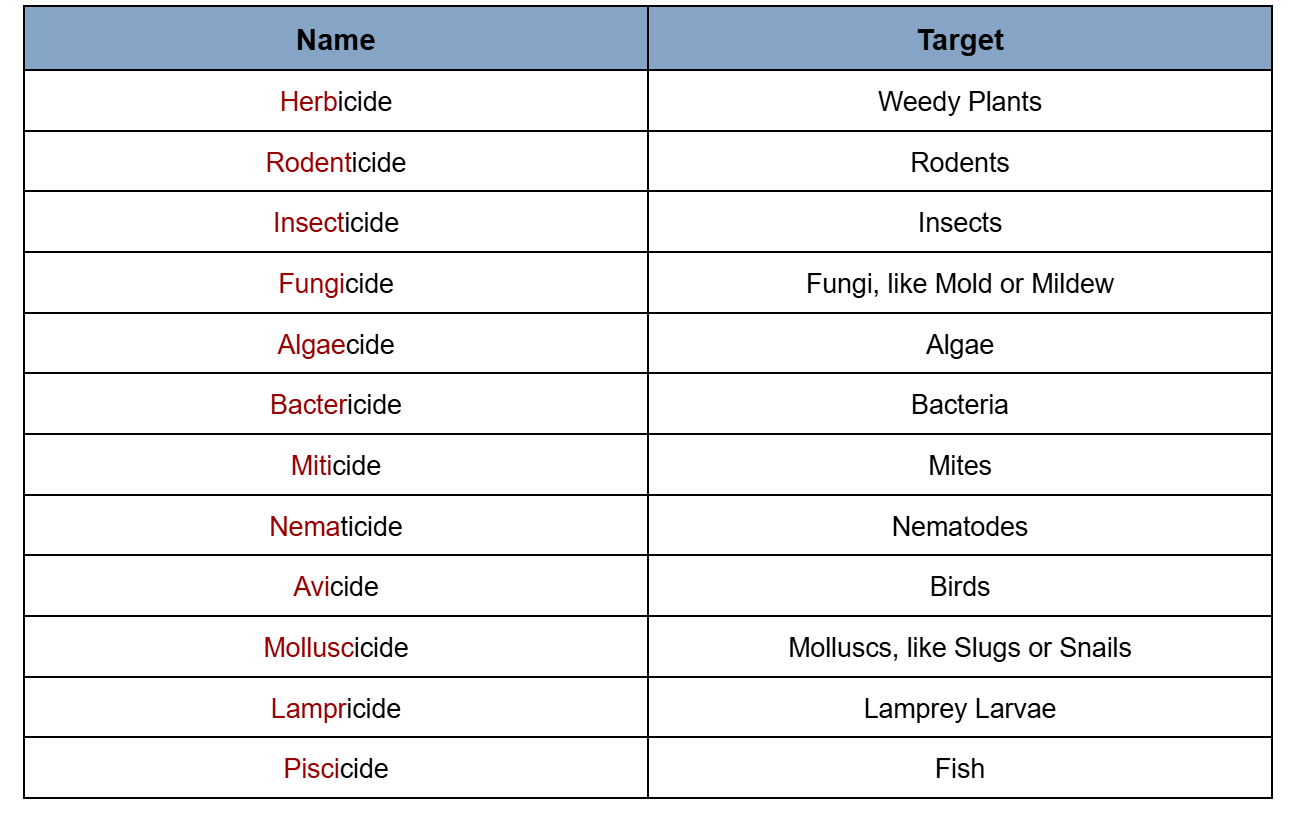
As you can see, there are a lot more pesticide applications than meets the eye - some of which never cross the mind of the average person!
Common Chemicals
This is by no means a comprehensive list, but if you choose to read more about pesticides in your free time, these are some prevalent active ingredients you may encounter. The word organic and its presence in a chemical name means the molecule contains carbon, bonded to either hydrogen or another carbon… very different from the food-label definition.
Organophosphates
Organophosphate molecules have a central phosphorous atom that is double-bonded to an oxygen atom:
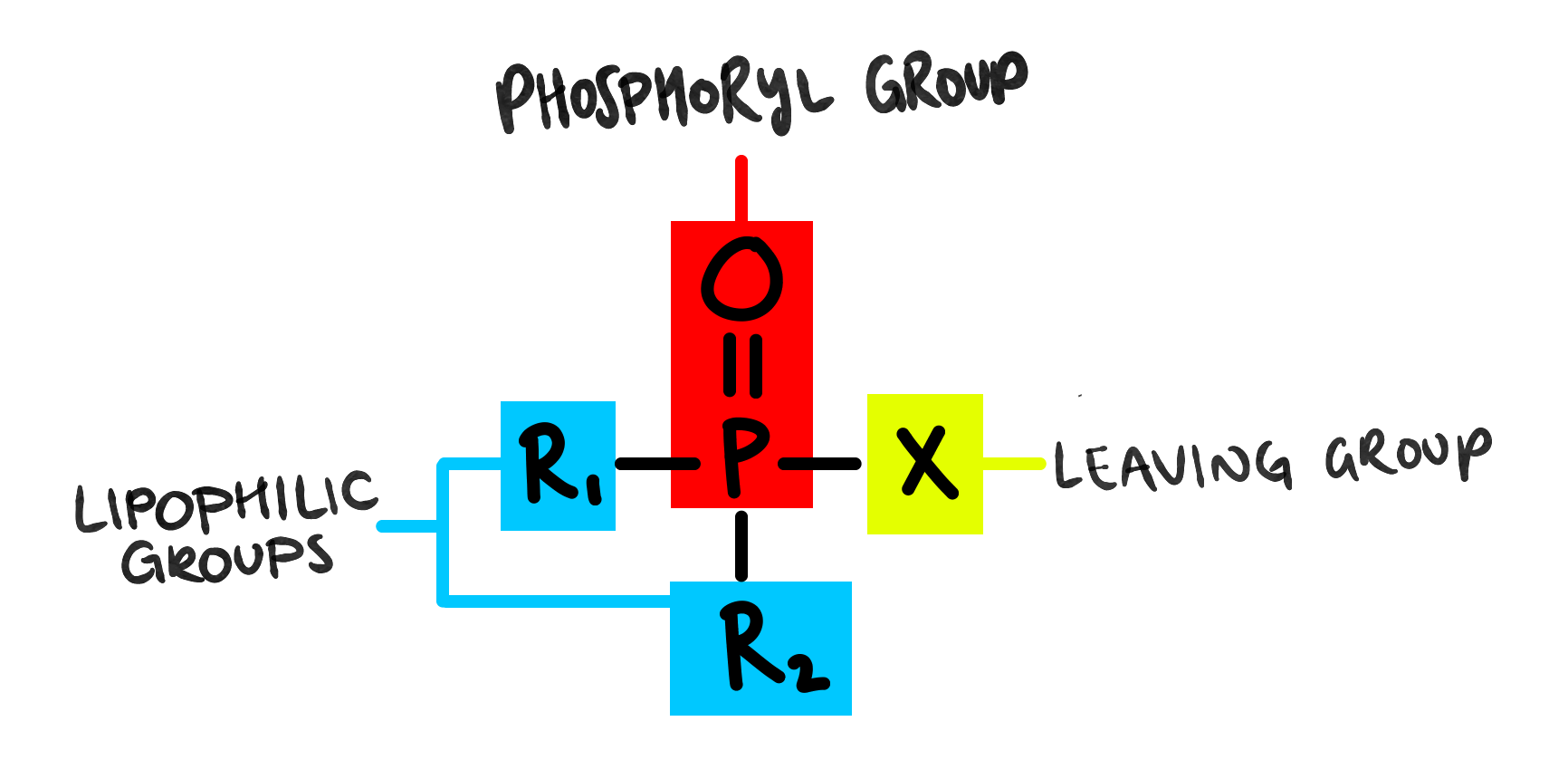
The pesticide acts as a potent neurotoxin. The chemical that helps nerve endings talk to each other, acetylcholine, is controlled by an enzyme called acetylcholinesterase (scientists like to name enzymes after what they control). The pesticide interferes with this enzyme, so too much acetylcholine builds up. Think of it like feeding too much voltage into an electrical appliance. The effects on the nervous system range from muscle weakness to seizures.
Other body systems can be stimulated or suppressed by the pesticide. The severity is based on area of exposure and dose. The immune system may be targeted, causing too much or too little inflammation. The heart, eyes, digestive tract, and more are affected. This class of pesticides has a dark history, as they were originally developed as chemical weapons during World War II. Their use has been restricted since 2001 due to the observed detriments of exposure.
Carbamates
Carbamates have a central carbon atom that is double-bonded to an oxygen atom:
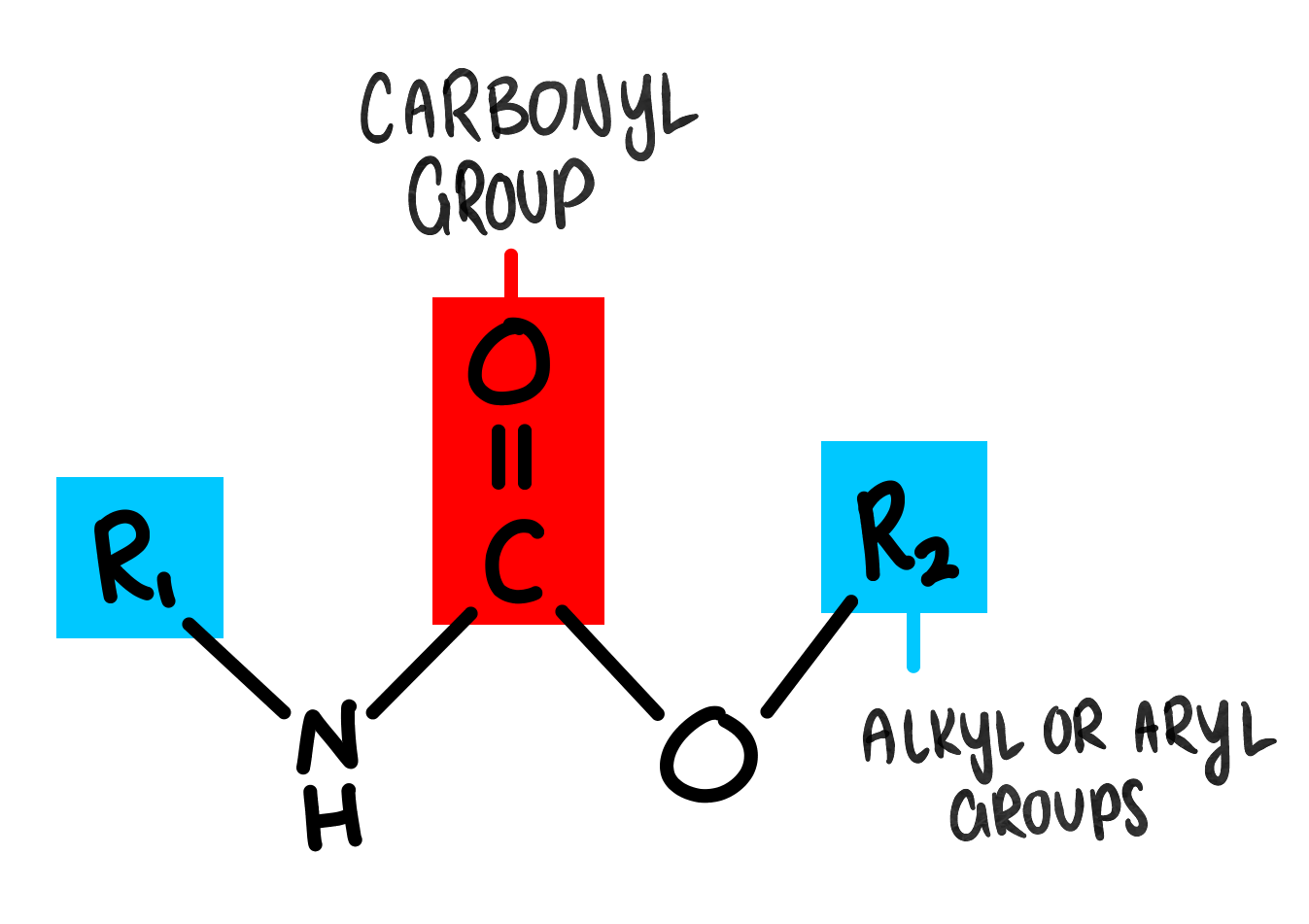
Carbamates work the same way as organophosphates by interfering with acetylcholinesterase. Because of this, symptoms caused by its presence are largely the same. However, carbamates can easily be broken off from the enzyme, so they are largely considered to be less toxic. It takes about 48 hours for the pesticide to stop its assault; then, the liver is your hero, breaking it down to be flushed away. Of course, if the dose is high enough, the effects can be very harmful.
Pyrethrins and Pyrethroids
“Pyrethrin” is the general name for a wide variety of insecticide chemicals. The name and specific effects will be different based on changes to a basic molecule, where places that differ can be represented with the letter R:
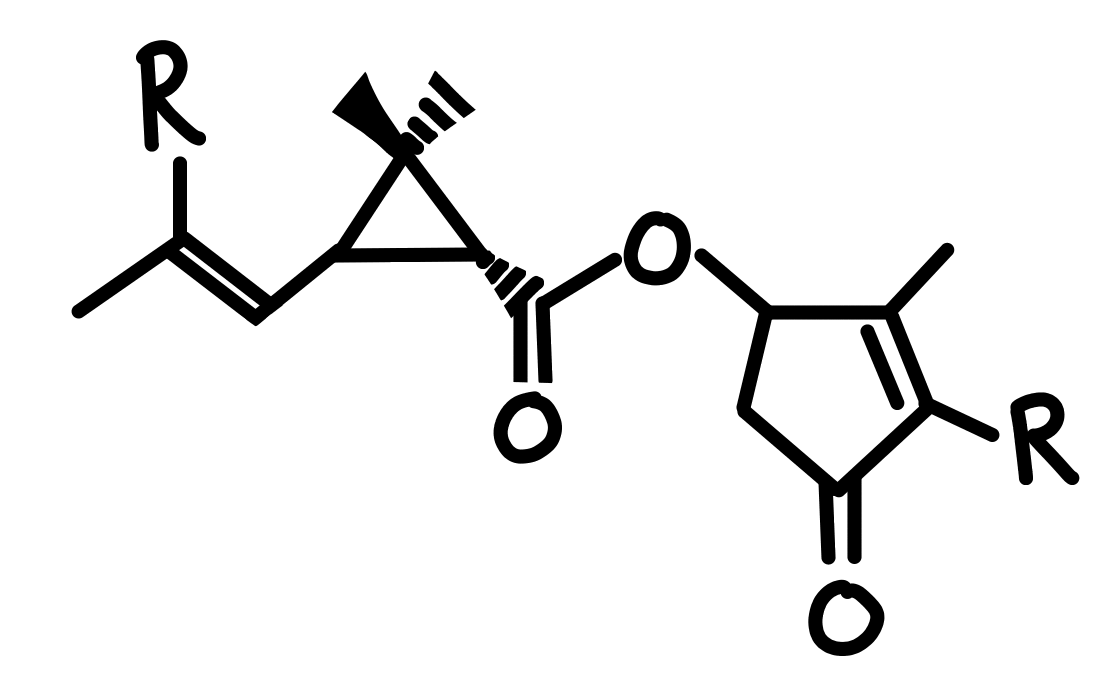
…as you can imagine, these molecules get pretty weird!
Pyrethrins are sourced from chrysanthemum flowers. Pyrethroids were created by scientists to be stronger, longer-lasting versions of pyrethrins. They are categorized based on toxicity. A common example is permethrin, which is sometimes applied to clothing or tents to kill mosquitoes and ticks.
These insecticides act as neurotoxins and cardiotoxins by changing the way things can enter and exit the cell. Sodium and chloride ions (the same things in table salt) have a bit of electric charge when they are floating around the cell membrane; when there is more or less of them in a certain place, different channels open or close to let molecules in or out. Because pyrethrins and pyrethroids dysregulate these channels, the chemistry of the cell and its environment is unbalanced. This disturbs nerves, digestion, and heart function.
Organochlorines
There are many different types of organochlorine pesticides, so there isn’t a basic molecule to show. They all have five or more chlorine atoms:
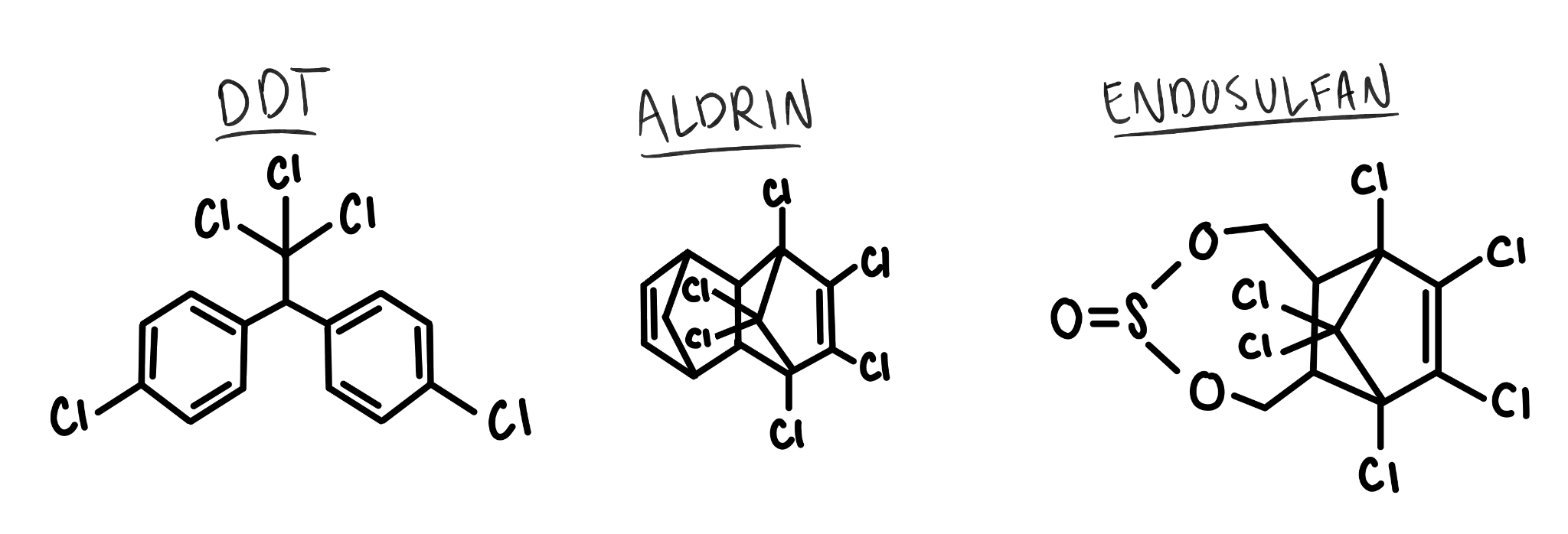
A large amount of used pesticides fall into this category, many of which have become household names like DDT, Aldrin, and Endosulfan. They are powerful “persistent organic pollutants” that were used extensively from the 1940s through the 1960s as mosquito control. Places with a lot of built-up environmental organochlorines have become Superfund sites.
These pesticides interact with the same channels that are affected by pyrethrins and pyrethroids, particularly in the axons of neurons. The increased danger comes from how the pesticide builds up in fat tissue, which is how it can travel from fatty food or prey to whatever eats it. In fact, that is the main way humans encounter the toxic effects. In the nervous system, affected neurons can cause health issues for both adults and developing embryos. Anything downstream of the nerve cell stops functioning as it should, leading to problems everywhere, like in the kidneys or thyroid.
Considerations to Make

In Defense of Pesticides
Every pesticide is made with the intention of solving a problem. While there are unintended side effects, we must remember that they have been instrumental in the control of deadly diseases, invasive species, and harmful parasites. Just because something can be called a chemical doesn’t make it bad - we eat, sleep, and breathe because chemicals keep us alive.
In the World of Birds
From stories told around the world to secrets kept by nature, pesticides make their way to unintended targets every day. Birds have many connections to pesticides that can be discussed. If you are interested, navigate to Part Two to learn more, from the mighty eagles of America to the tiny quail of Japan.
Contributing writer and researcher: Logan Bourgeois